The Story

It started at a bus stop.

On a bright morning in January 2005, five children in tattered clothes stood watching others step off a school bus. The only thing they shared was a bag on the back. In one were books and a tiffin. In the other, garbage.

Getting started

Children of a lesser sky.

Tiny feet bruised by glass, bare on hot tar roads, carrying back garbage with hardly a meal in their bellies. Neither the Sarva Shiksha Abhiyan nor the midday meal could pull these children off their daily grind.

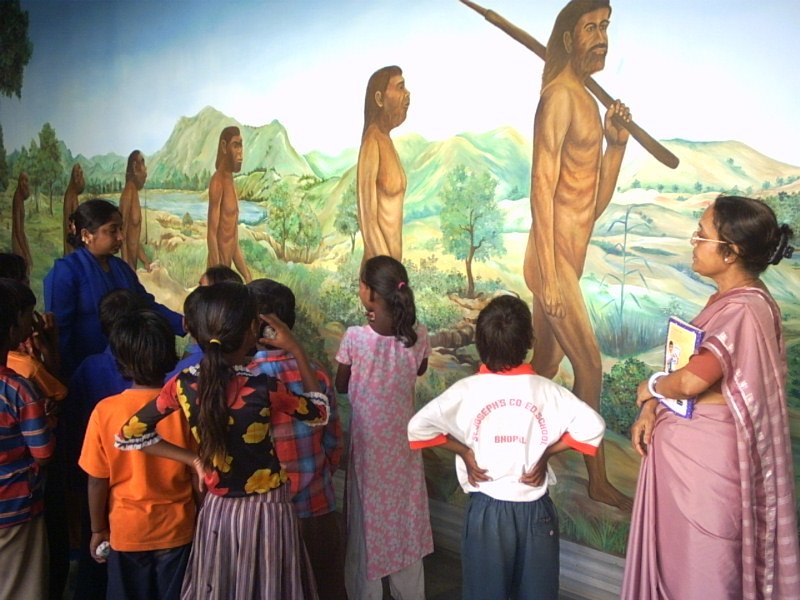
OASiS, the Organisation for Awareness of Integrated Social Security, took it up as a challenge. The search for a method led to Tagore's Shantiniketan and the International Centre of Education at the Aurobindo Ashram in Pondicherry. Combining the best of these, OASiS partnered with three Bhopal museums and, on 5 September 2005, Parvarish began.
The journey

Twenty years, in moments.

2005 to 2025 · Two decades, 2,500+ children

Jan 2005

A meeting that would not leave

A chance encounter with rag-picker children at a posh-colony bus stop set everything in motion.

Sep 2005

The first day

Project Parvarish opened with the blessings of academicians and teachers. Fifty children came; the number soon settled at twenty. Drunken fathers, fearing lost earnings, abused the volunteers who came to register their children.

2006 to 2007

Word spreads

As children carried learning home, abuse turned to appreciation. From 20 children in one slum, the project grew to 70 across three in just eighteen months.

2016

The world takes notice

The Museum School won the UNESCO Asia-Pacific Wenhui Award for Educational Innovation and was named among HundrED's 100 global inspiring innovations in K12 education.

2020

Hands that paint

Through the pandemic, children hand-painted Warli, Mandana and Madhubani diyas under the brand Artsy, earning and shipping their work across India and overseas.

2025

Twenty years on

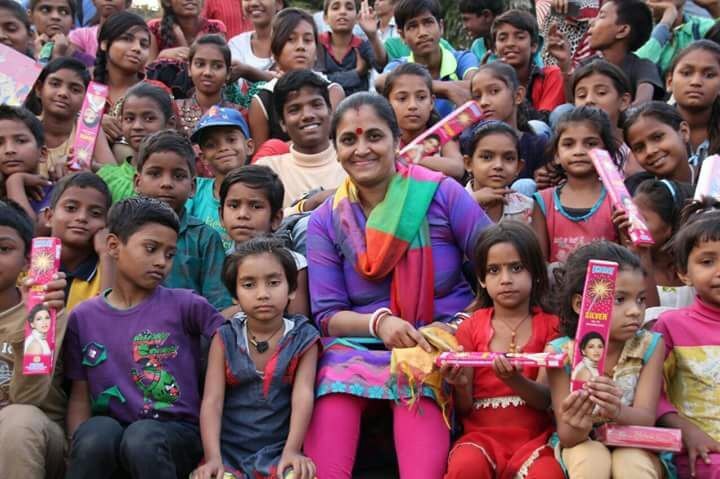
More than 2,500 children later, Parvarish marked two decades, with former students now graduates, artists, entrepreneurs and teachers.

A typical day

From the slum gate to the gallery floor.

Urban children who had never been to school, or had run from it, jump for joy in the company of learning. They use science models as toys, swing among trees in the rain, paint the world with the colour of leaves, write on a slate of sand, and play treasure hunt in tribal habitats to understand culture.

14:00 · Collection

The walk to the bus

Teachers reach each slum on foot, meeting families and asking after their wellbeing before walking the children to the stop.

At the museum · Lessons

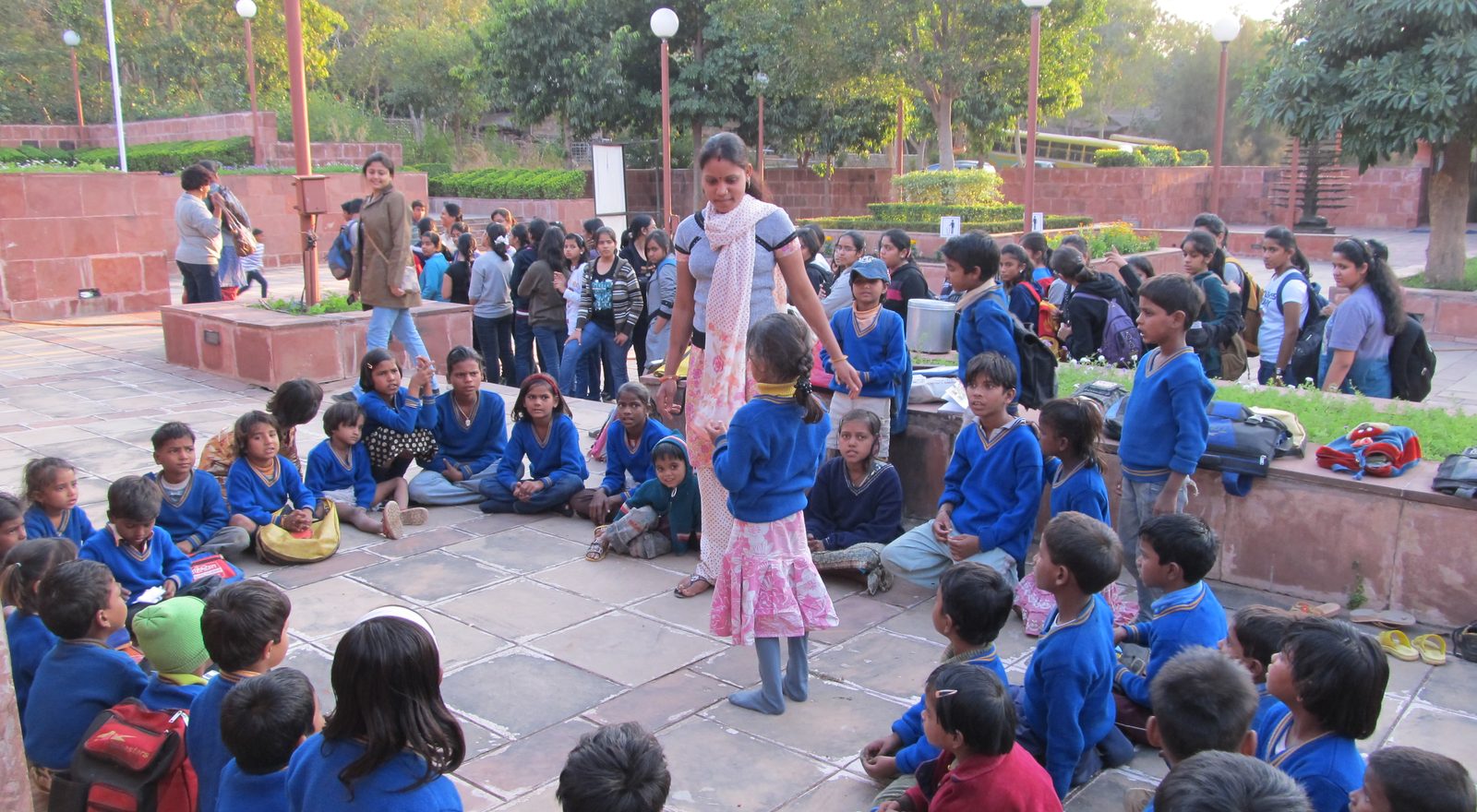
Prayer, then play

A prayer song, then groups by age move to different spots. Lessons use objects from nature and games, followed by a shared meal and time to play.

Return · Home

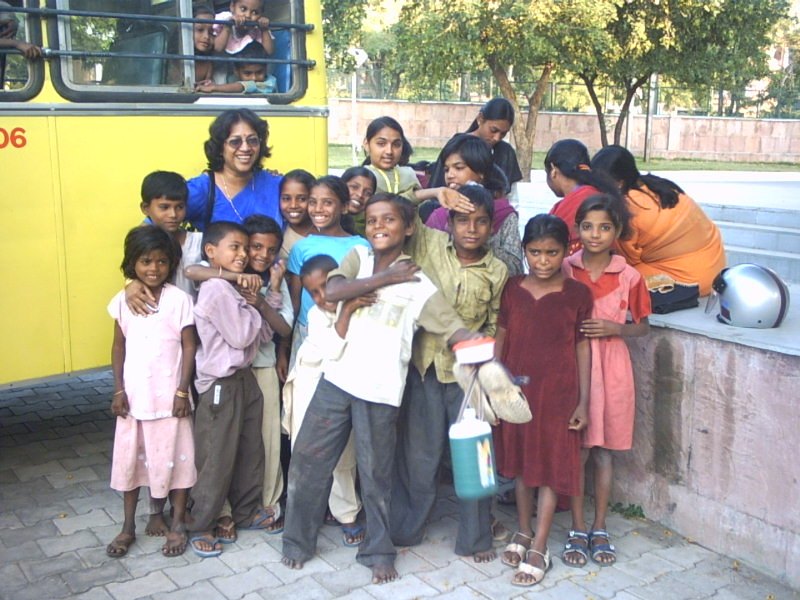
A bus full of songs

Every passing commuter knows the return trip by its singing. Then home, to share what was learned today.

The people

Built by hand, child by child.

PG

Pradeep Ghosh

Founder, OASiS · Teacher Trainer · Ashoka Fellow 2004

After fifteen years of a corporate career across twelve countries, he left to start OASiS, a lab for social innovation. The Museum School is one of its models, designed to solve urban education by converging what a city already owns.

SG

Dr. Shibani Ghosh

Chief Coordinator · Director, The Museum School

She leads the school day to day, from registering children in the slums to guiding their move into mainstream schools and, more recently, their folk-art livelihoods. The teachers and volunteers, she says, are the school's real strength.

The teaching corps

Teachers from the same lanes

Parvarish also trains educated girls from the slums as part-time literacy teachers. Because they come from the same community, families feel safe sending their children, and the young women find standing and confidence as teachers in their own neighbourhood.

Recognition

A small experiment, noticed widely.

2016

UNESCO Wenhui Award

The Asia-Pacific Wenhui Award for Educational Innovation, recognising partnerships that advance inclusive, quality education.

K12

HundrED Global 100

Named among one hundred inspiring innovations changing the face of school education worldwide.

KCL

King's College London

Part of the My Primary School Is at the Museum project, developed by the university's Cultural Institute.

TATA

Dorabji Tata Trust

An early supporter of the experiment that helped the idea grow into a People's Project.